Education
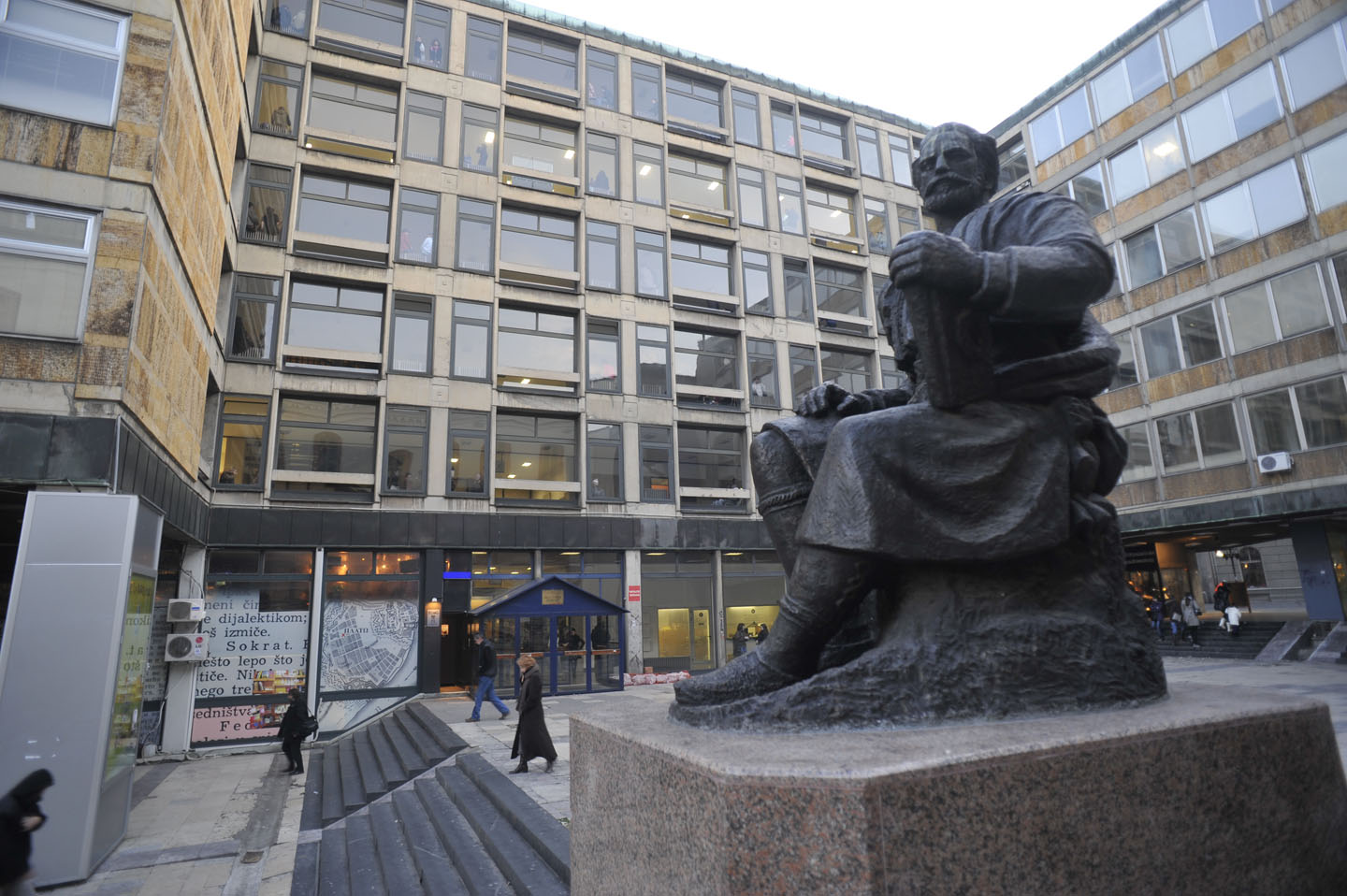
Whose plateau is in front of the Faculty of Philosophy
After numerous problems and the transfer of responsibilities, a permit was issued for the reconstruction of the Academic Plateau at the Faculty of Philosophy in Belgrade

After the partial implementation of the EES system that lasted from last October, those traveling in the EU now expect stricter identification rules
Full implementation EES system at the borders Of the European Union begins on April 10. Even before the official implementation of this system, and even after holidays, there were many hours of waiting at the Batrovci or Horgoš border crossings.
After the partial implementation that lasted from last October, travelers can now expect stricter identification rules, but also potential delays at crossings that are traditionally the busiest during holidays and the summer season.
Director of the National Association tourist Serbian agency Aleksandar Senicic told RTS that passengers should adjust their travel plans, especially when returning from the European Union, which means arriving at the airport earlier than was the case until now.
Senicic said that one of the most common doubts of citizens is related to departure from domestic airports, but he emphasized that there will be no changes in that part.
"The EES system refers to entry into the countries of the European Union. There is no reason for us to come to our airport much earlier than before," Senicic emphasized.
"All the newspapers from April 10 refer to the control when entering the EU countries, where passengers will be registered, biometric data will be taken and the stay in the EU country will be checked in more detail. This is where the biggest delays are expected, especially on days of increased traffic," Seničić points out.
It indicates that travelers will have to adjust their plans, especially when returning from the European Union.
"When we return from European Union countries, we have to plan to arrive at the airport a little earlier than usual, a couple of hours, an hour and a half earlier than we normally did before in order to finish the procedure on leaving the European Union countries on time," Senicic said.
Given the expected increase in the number of passengers, especially during the holidays and summer months, the question is how the system will work in practice and whether it will lead to a collapse at the border crossings.
Seničić states that some members of the European Union have also expressed concern about possible crowds.
"The European Union made a decision that local authorities can at a certain moment, if they notice a collapse or a big crowd at the borders, make a decision to suspend this system for a certain period of time," said Seničić.
He explains that in those situations, passengers could pass according to the old rules.
"This means that most of the time, in the next few hours, passengers pass through the old system, i.e. with stamps in their passports, and in that way the crowds at the border crossings are reduced as quickly as possible," said Seničić.
This possibility could alleviate the biggest problems in the peak season, but it does not mean that crowds will be avoided.

The introduction of the EES system is already reflected in tourist flows and Seničić emphasizes that there is a decline in interest in traveling to European Union countries.
"Certainly, this system leads to the fact that part of the passengers do not want to think about traveling to the European Union precisely because of the long wait at the border crossings," Senicic pointed out.
As he adds, citizens are increasingly turning to alternatives.
"We are turning to neighboring countries that do not apply this system. First of all, I am thinking of Bosnia and Herzegovina, North Macedonia and Montenegro, as well as domestic tourism," said Seničić.
This trend, as he points out, can have a double effect - on the one hand, it is an incentive for domestic tourism, and on the other, it is a problem for travel agencies that organize trips to European Union countries.
Seničić concludes that more patience and better travel organization will be necessary in the coming period.
"Patience, a good plan to start earlier, to see if there are alternatives and to opt for those alternatives," said Senicic.
In October 2024, the European Union began the gradual implementation of a new system for crossing external borders for citizens of countries that are not members of the Union.
The Entry/Exit System (EES) is an automated IT system for the registration of third-country nationals traveling to the EU for a short-term stay. The system applies to passengers who are not citizens of the European Union, nor of Iceland, Liechtenstein, Norway or Switzerland.
When entering or leaving the Union, travelers are obliged to leave biometric data - fingerprints and a photo of the face - collected by the border police.
The new system began to be implemented on October 12, while its full implementation is expected from April 10, 2025.
At the end of 2026, the implementation of the new European Travel Information and Authorization System (ETIAS) should begin.
ETIAS is an electronic travel permit for entering the countries of the Schengen area and several associated European countries.
Before traveling, travelers will have to fill out an online application, leave basic personal information and pay a fee of seven euros. The system then automatically checks the data in EU security databases.
With a valid ETIAS travel authorization, you can enter the territory of these European countries an unlimited number of times for short-term stays, up to 90 days within any 180-day period. However, ETIAS does not guarantee entry into the country. Upon arrival, the border officer will ask for your passport and other documents and check that you meet the entry requirements.
Real journalism costs money, and we will not be bought by tycoons and corporations. Support us with a one-time or monthly donation. The time for it is now!
After numerous problems and the transfer of responsibilities, a permit was issued for the reconstruction of the Academic Plateau at the Faculty of Philosophy in Belgrade

The labor inspectorate cannot supervise two applications at Jovan's high school "Jovan Jovanović Zmaj" because the principal Radivoje P. Stojković does not allow them to do so, according to the students' parents.

Greece, as well as numerous other countries, are introducing or at least considering banning social networks for children. However, in Australia it has been shown that such regulations do not necessarily mean that children will stop using them

Although the Shelter is intended for emergency care of homeless people, there are waiting lists for admission. With the arrival of winter, the situation becomes even more difficult. How the living conditions became so bad in the institution, which should provide a safe haven for the most vulnerable - is not known

NUNS demands an urgent investigation due to the threats sent to two Radar journalists who wrote about the Sky correspondence in which Aleksandar Vučić is mentioned. The association states that the threats also mention violence against children of journalists and warns of impunity

There is, literally, no difference between the one who claims it is day in the middle of the night, or the one who claims to be a giraffe, from the claims we read on billboards: that Vučić is working to unify Serbs and that Serbia is doing better and better day by day.

The pre-election arrests due to the alleged "overthrow of the state" testify to the regime's panic. The bad news for them is - they can't arrest the whole people who decided to defend themselves from progressive beatings and election theft

The ring that tightens around Ćaciland Student list is getting narrower. Because there are more and more spoiled people who see the false prophet for what he is: a street obscener who is fighting Serbia

The archive of the weekly Vreme includes all our digital editions, since the very beginning of our work. All issues can be downloaded in PDF format, by purchasing the digital edition, or you can read all available texts from the selected issue.
See all