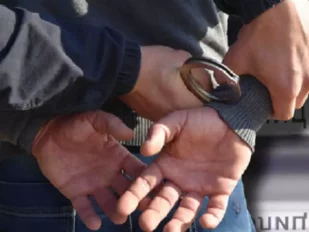
Youngest with developmental disabilities they often don't have an accessible way to report violence in Serbia, they do not know who to turn to, while professionals do not recognize their communication needs. In addition, they face unadapted space and public transport, lengthy conversations and procedures.
"Serbia does not have accurate data on the number of children with developmental disabilities. In addition to obstacles of a procedural nature and inadequate communication, they also face accessibility," explains the executive director of the National Organization of Persons with Disabilities of Serbia - NOOIS Ivanka Jovanović.
She adds that most judicial facilities and other institutions there is no ramp for wheelchair, accessible toilets and tactile paths. The Committee on the Rights of Persons with Disabilities of the United Nations recommended to Serbia that persons with disabilities be provided with unimpeded and non-discriminatory access to justice, including appropriate procedural adjustments.
The problem is not only in individual procedures, but also in the insufficient cooperation of different services. When there is no clear responsibility and coordination, there is a risk that the child "passes between the systems", without the support he needs.
"During the past two decades, a significant normative and institutional framework of child-friendly justice has been developed. But the main problem is not the absence of rights. The key change should be the transition from discretionary measures and late reactions to guaranteed rights, to early recognition of needs and timely support," says Ines Cerović, a consultant in the field of human rights and children's rights. "It should not be assessed whether a child is 'suitable' for court proceedings, but what the system must do in order for the child to be able to participate effectively. It is a child rights-based approach."
When will children receive support?
One of the important messages of the workshop, which was organized by the Center for Children's Rights as part of the ENSURE project, is that "instead of adapting the child to the system, it is necessary to perfect the system that will respond to the needs of each child."
"Until now, we have seen how the system works in practice," says the director of the Center for Children's Rights, Jelena Paunović. "National reports were presented in Austria, Romania and Serbia, and based on national research and international experiences, the ENSURE Model was developed, which elaborates the roles of a special representative, communication mediator and support person. Now we are moving from research to concrete solutions. This means that every child should receive support adapted to their needs, that adjustments in the procedure and communication become the standard, not the exception, and that we build a sustainable system of professional support, training and clear quality standards."
The child is not his diagnosis.
Developmental disabilities, trauma and stress can affect the way a child communicates. That is why experts believe that it is important to recognize his needs and adjust the procedure by giving him enough time, allowing breaks, using language he understands, visual support such as pictures, communication boards and other aids, but also making sure that the child has understood the question.
"The child is not his diagnosis. It is necessary to change the perspective - that we do not evaluate the child, but understand it," said prof. Dr. Milica Pejović Milovančević from the Institute for Mental Health.
Real journalism costs money, and we will not be bought by tycoons and corporations. Support us with a one-time or monthly donation. The time for it is now!