In October 2007, a XNUMX-year-old man of Turkish origin was brought unconscious and with severe heart damage to the emergency room of the Vienna State Hospital. Electrocardiogram showed second degree AV block. At first, the doctors did not know what was the cause of the patient's serious condition, but the mystery was solved the next day, when the patient's relatives brought a jar of honey to the hospital, which came from the Black Sea coastal region of Pontus in the east of Turkey. This was the first documented case of honey poisoning in the European Union. Since then, there have been more and more scientific papers in specialized medical and toxicology journals dealing with the unusual phenomenon of food poisoning called "mad honey disease".
CRAZY HONEY: Behind several enigmatic names, among others, "mad honey" (meli maenomenon), "poisonous honey" (deli bal), or "miracle honey" (miraculum melis), as, for example, the Roman historian Pliny called it because of the trance in which its consumers used to eat, hides a special kind of honey, especially interesting because of its psychoactive and toxic properties. According to some descriptions, this honey is reddish in color and has a sour-bitter taste. Other authors disagree with this description and state that mad honey cannot be distinguished in any way - not by color, taste or smell - from any "proper honey" and that on the same honeycomb you can find "crazy" and "normal" honey.
THE HISTORY: Written traces of this unusual natural substance go back a long way. One of the oldest and most explicit mentions dates from the end of the 5th century BC Xenophon in his work Anabasis describes how in 401 BC, after terrible battles in Persia, he was chosen to command 10.000 Greek soldiers. He led them through the mountains of Kurdistan, through Georgia and Armenia. And then they set up camp two days' march from the city of Trabzon, where something very unusual happened: "There were many swarms of bees nearby, and the soldiers who ate the honey lost their heads, vomited and had diarrhea, and none of them could stand on his feet. Those who did not eat a lot of honey looked very drunk, while the others who ate more went completely mad, and some even looked as if they were going to die... The next day, however, no one died, and at about the same time of day as when they consumed honey, they began to come to their senses and control the situation..." Three centuries later, in 67 BC, in his work Geography Strabo describes one of the first cases of biological warfare. The Roman army reached the vicinity of Trabzon, the same area through which Xenophon's soldiers passed three centuries earlier. The Heptacomites, allies of the king of the Pontus region, placed honeycombs with poisoned honey along the road through which the soldiers arrived. Like Xenophon's men three centuries earlier, the soldiers felt the effects of mad honey. However, this time the consequences were fatal, as the Heptacomites massacred the intoxicated Roman soldiers. Pliny (about AD 77) in part Natural history, states that the inhabitants of Pontus could not sell their honey to the Romans because it was poisoned, although they traded in huge quantities of wax. Pliny is one of the first authors to mention that mad honey comes from rhododendron.
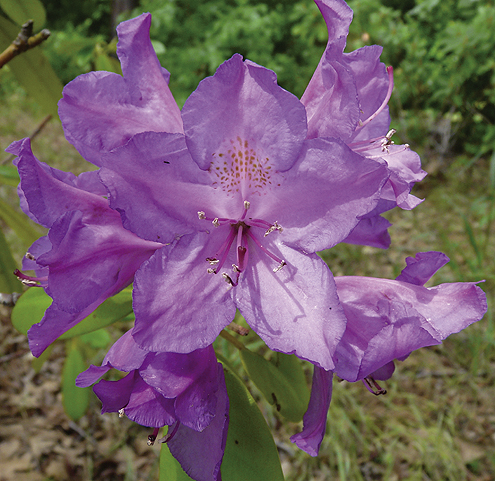
BLACK POISON: The name of this plant is derived from Greek words rhodos, which means rose and Dendron, which means a tree. There are over 700 species distributed in China, Tibet, Myanmar and Nepal; approximately 300 in New Guinea, Japan, Indonesia and the Philippines; and only a few in Europe and North America. A particularly poisonous species is widespread on the Turkish coast of the Black Sea, Rhododendron ponticum, which the locals call mountain rose or black poison due to the high content of the neurotoxicant heatanotoxin in the nectar of the plant. Given that in the spring rhododendron dominates the floral flora of Pontus, it is precisely the honey that bees collect in this period that is the most poisonous, as it then contains the largest amount of poison. Except in Turkey, where it is a native species, Rhododendron ponticum was introduced to England and Ireland more than two centuries ago, via Spain and Portugal, and can be found in many gardens where it is grown as an ornamental plant.
ETHNOMEDICINAL: It is interesting that in the east of Turkey, poisonous rhododendron honey is used as a medicine in traditional medicine, as evidenced by the unfortunate case of the patient at the beginning of the text who received the honey from a relative from his hometown. Despite the fact that its consumption is known to lead to a series of negative consequences, mad honey is recommended in Turkish folk medicine for the treatment of duodenal ulcers. It is also believed to improve digestion and act as an aphrodisiac. Because of the latter, most poisoning victims come from the population of middle-aged men. The local population also uses it as a means to alleviate stomach and rheumatic pains and toothaches, as well as for disorders of the digestive organs, hypertension, upper respiratory tract infections and swelling. It is interesting that the inhabitants of Pontus most often spontaneously recover from poisoning without reporting to health institutions.
ALCOHOL: Centuries ago, honey from Pontus was also used as an addition to alcoholic beverages to increase their intoxicating effect. At the end of the 25th century, about XNUMX tons of crazy honey went to Europe every year, where it was distributed in taverns all over the continent. In France at that time, a very intoxicating liqueur was made from it miel fou (crazy honey). Honey from another, also toxic plant, mountain laurel (kalmia latifolia), was used to make a devastating liquor, which was served in the taverns of New Jersey during this same period. Its commercial name was Metlegin.
SYMPTOMS OF POISONING: "Crazy honey disease" is also called "rhododendron poisoning", "crazy honey intoxication" or "greanotoxin poisoning", a neurotoxicant that occurs in 18 different forms, of which greanotoxin I is the most toxic. Unlike colleagues from the European Union, the symptoms of honey poisoning are nothing new and unusual for doctors in the east of Turkey. The well-known consequences are: slowed heart rate, cardiac arrhythmia, low blood pressure, nausea, vomiting, increased salivation, loss of consciousness, dizziness, fever, malaise, bruising and frequent spasms. In the medical literature, one can also find a large number of descriptions of the hallucinogenic effect of mad honey: euphoria, madness, tingling, tingling, dizziness, the impression of a whirling movement of light, a vision of passing through a tunnel, etc. It is believed that between five and 30 grams of honey is enough to cause poisoning, which only in very rare cases ends in a fatal outcome. The described symptoms usually last about 24 hours, and depending on the dose of honey consumed, they appear after a few minutes or at the latest after a few hours. Just a teaspoon or two of rhododendron honey can lead to severe poisoning accompanied by hallucinations.
HEALTH: Given that we live in an era of healthy eating imperatives and trends that dictate the consumption of "food as natural as possible" and "treatment with natural preparations", the story of crazy honey can serve as a kind of warning that such a way of thinking can sometimes lead to, say, serious heart problems, fever, or you may feel like you have been traveling through a dark tunnel for a long time.
The author is the editor of the "Beekeeping journal", a popular science magazine for beekeeping; www.umeljic.com